After about 1.5 years of having a DSLR, I’ve gotten myself a nifty fifty for my second lens. 50mm on an APS-C camera has an effective focal length of 75mm, so it’s very zoomed in. It’s a prime lens, meaning I can’t change the zoom: if I want to get a further photo of a subject I have to move further away from it.
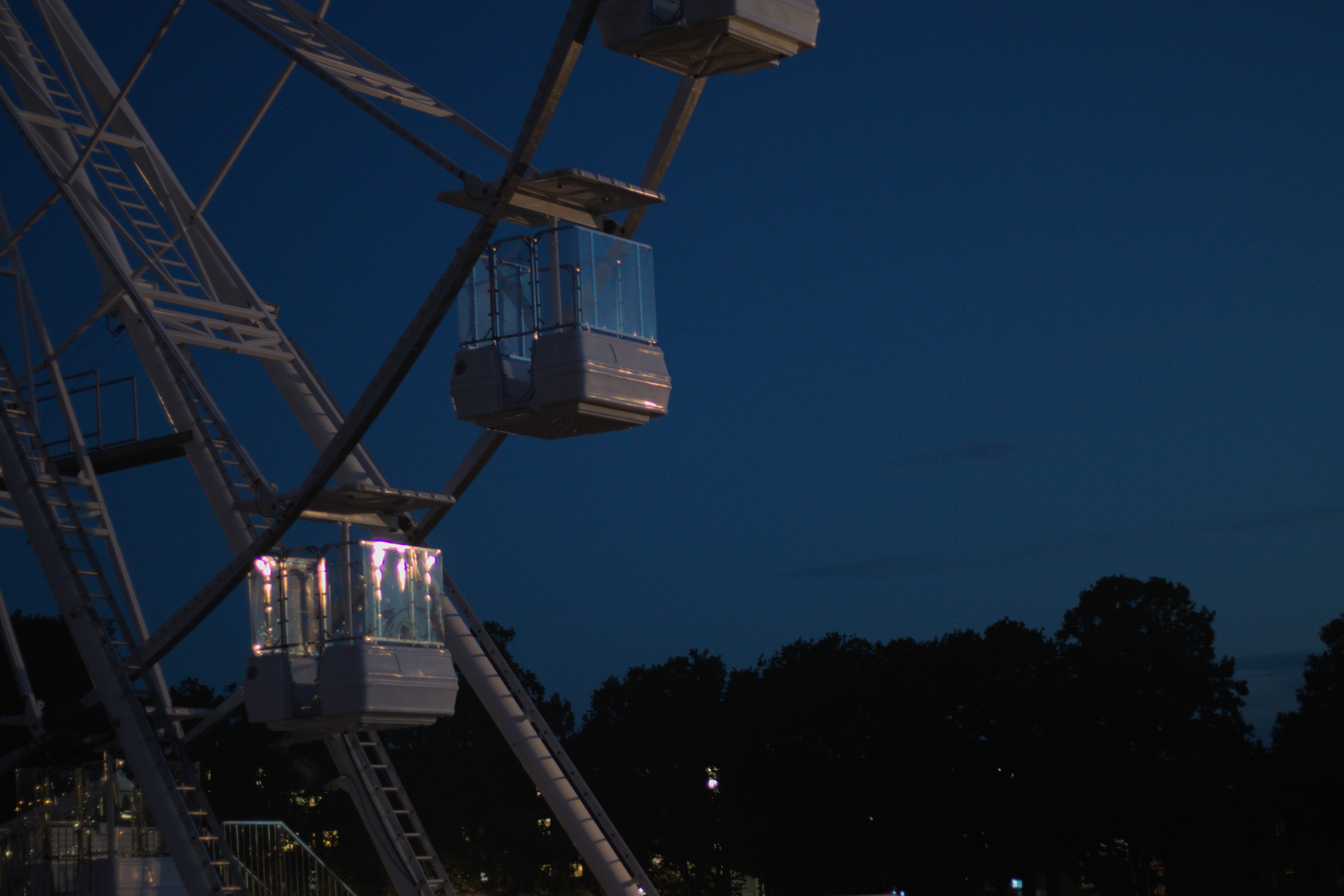
If you look at the previous pictures on this blog most of them were taken towards the long, 55mm end of my kit lens focal range. I really enjoy doing layering and framing with a long focal length. A friend once told me that my photos look claustrophobic; as a kid, I was always fascinated by the details of things and the items I would spot close to me on the ground. I once got irrationally angry looking at an album of photos I took around age 6-8 because the photos were all zoomed in to boring details or items instead of people or places (laughs)… But why not try leaning into it? Of course, a long focal length is good for portraits too (because of something called compression).
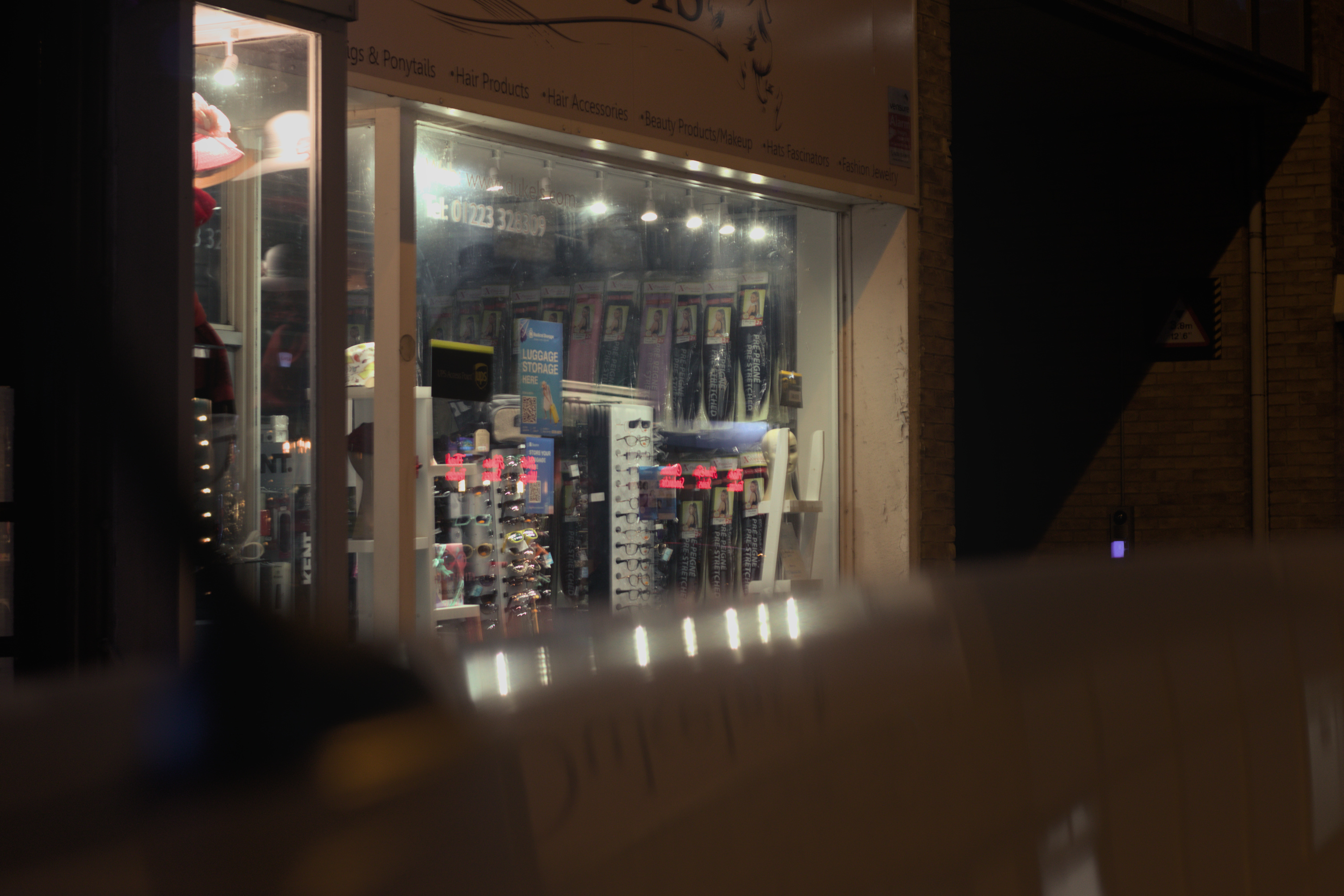
Layering the top of a car in the foreground
I swear it’s not a coincidence that my second lens is the cheapest you can get after the default kit lens. The main reason I went for a prime is that it’s light and small. It’s also simple. Whether to zoom in or out is a variable to play with in photography, almost the only one I have played with so far–despite sticking to manual mode I only focused on using the different settings to capture my subject clearly. Eliminate this variable and I can focus on being intentional about long shutter speeds (capturing motion with long exposures) or aperture (depth of field/how much of the image to focus on).
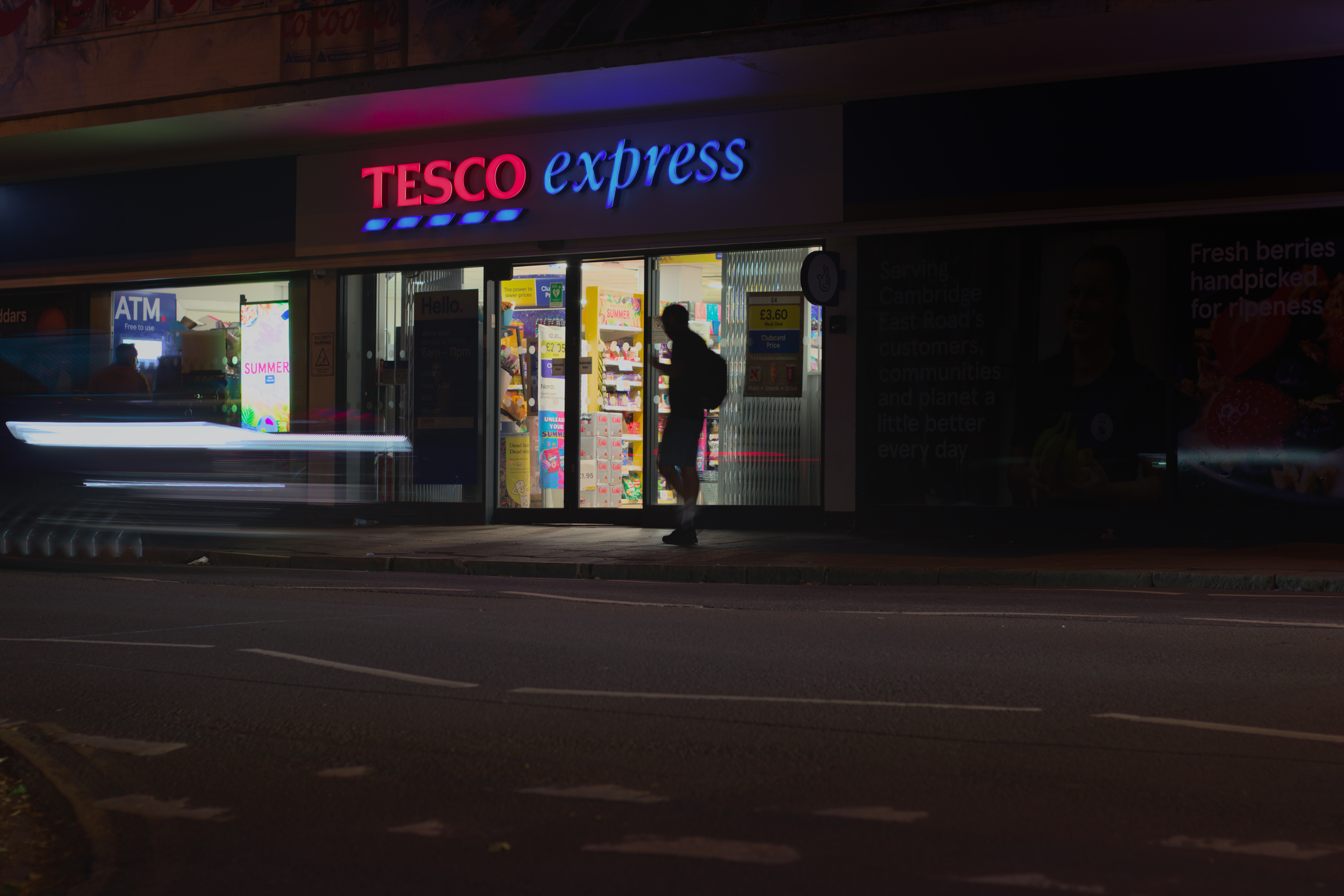
Passing cars turned into streaks by long exposure
So, my photography goal for the future is to get comfortable choosing between and using shutter and aperture priority modes (shoutout to this video I found which has a basic rundown of camera settings for priority modes).
However, this latest night walk convinced me that it’s still futile to use anything but manual mode at night. The amount of light in the scene is too variable, and the camera’s idea that ‘lightest part of the image = white’ leads to pictures almost always being overexposed. I believe only the last of the images here was taken in shutter priority mode, the other two were manual.
Side note: the photos this time have been edited more aggressively than usual, reminding me of last time when I posted thoughts on photo editing. I found a trick in darktable where you can turn down the local contrast slider and it gives a trendy look. The result might be a bit generic.