I haven’t updated my blog in a while; the simple reason for it is that blogging is a habit for me, and habits are easily broken, especially when going through other life changes.
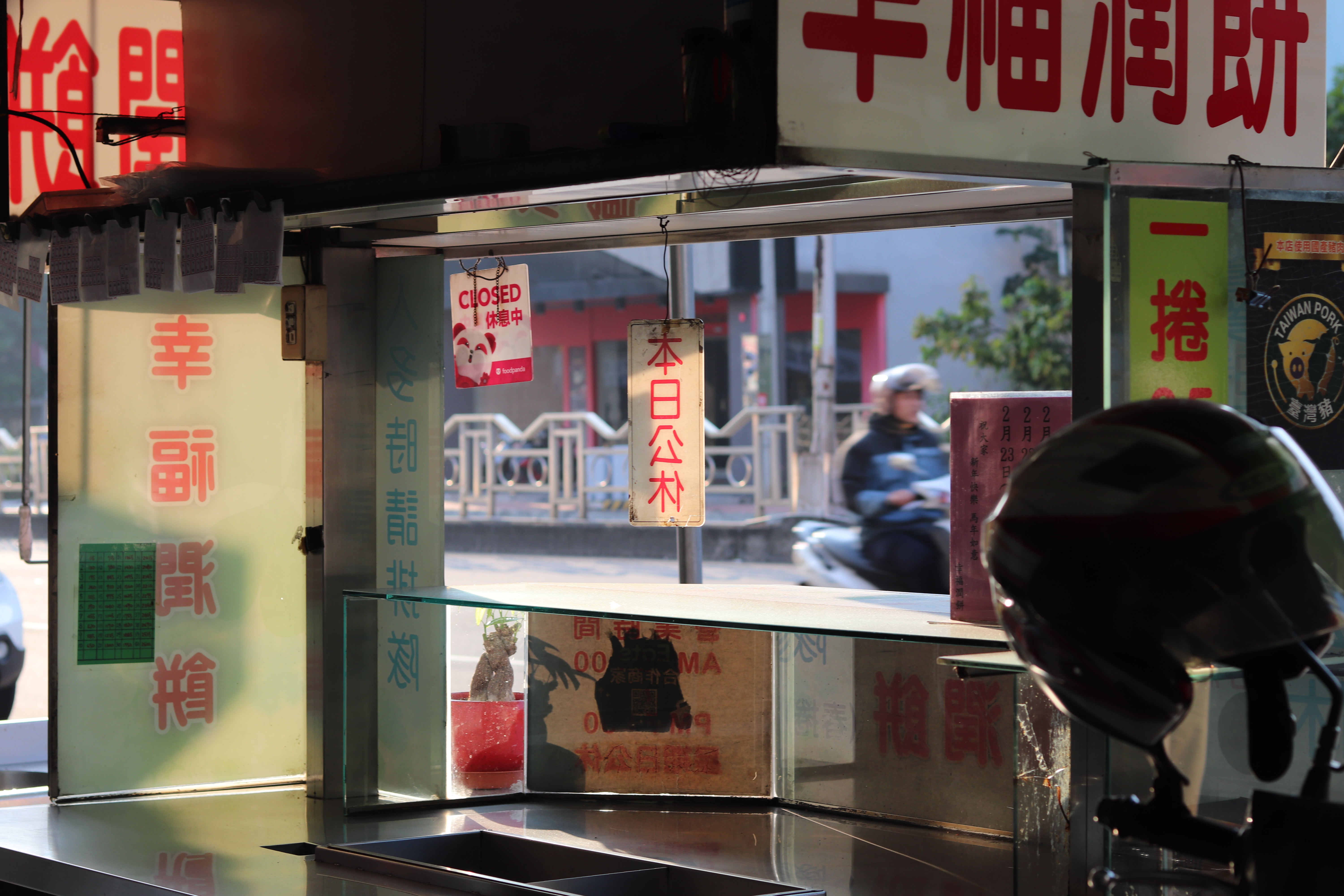
In Taichung’s Central District
However, after a year in Taiwan, 9 months of which were spent attending daily Chinese classes, it’s time to describe some of my progress.
In other words, here are some of the many milestones that intermediate language learners can look forward to hitting…
TL = Target Language, in my case Mandarin Chinese.
- Expressing abstract concepts (this was my most commonly felt frustration before I started as it interfered even with solo activities such as thinking or writing in TL) and speaking about new topics. I felt proud when recently after I read a Taiwanese self-published manga, I was able to leave a coment praising the story and artwork despite having never really discussed those topics before, and it seemed like my comment was well received.
- Being able to have friendly conversations with learners at the same level or with language exchange partners
- Feeling comfortable scanning a menu in a restaurant, drink shop, etc. and ordering something that looks good. This is huge for quality of life in Taiwan where eating out is commonplace and restaurants love to offer lots of options and variations. I am still not at 100% comprehension, but I went from being overwhelmed and having to put the whole menu into Google Image Translate, to being able to pick out the dishes that look good, and perhaps looking up one or two words in my dictionary app or online. The best part is when I at least know the phonetic reading of a menu item: even if I don’t know exactly what it is, it becomes very quick for me to type it in on my phone and check out photos of the dish on Google Images.
- Reading signs on the street. Understanding the text in my environment feels extremely natural and right and makes me feel good when I’m walking outside. Honestly, I read signs out loud while walking a lot. I will miss doing this when I leave Taiwan.
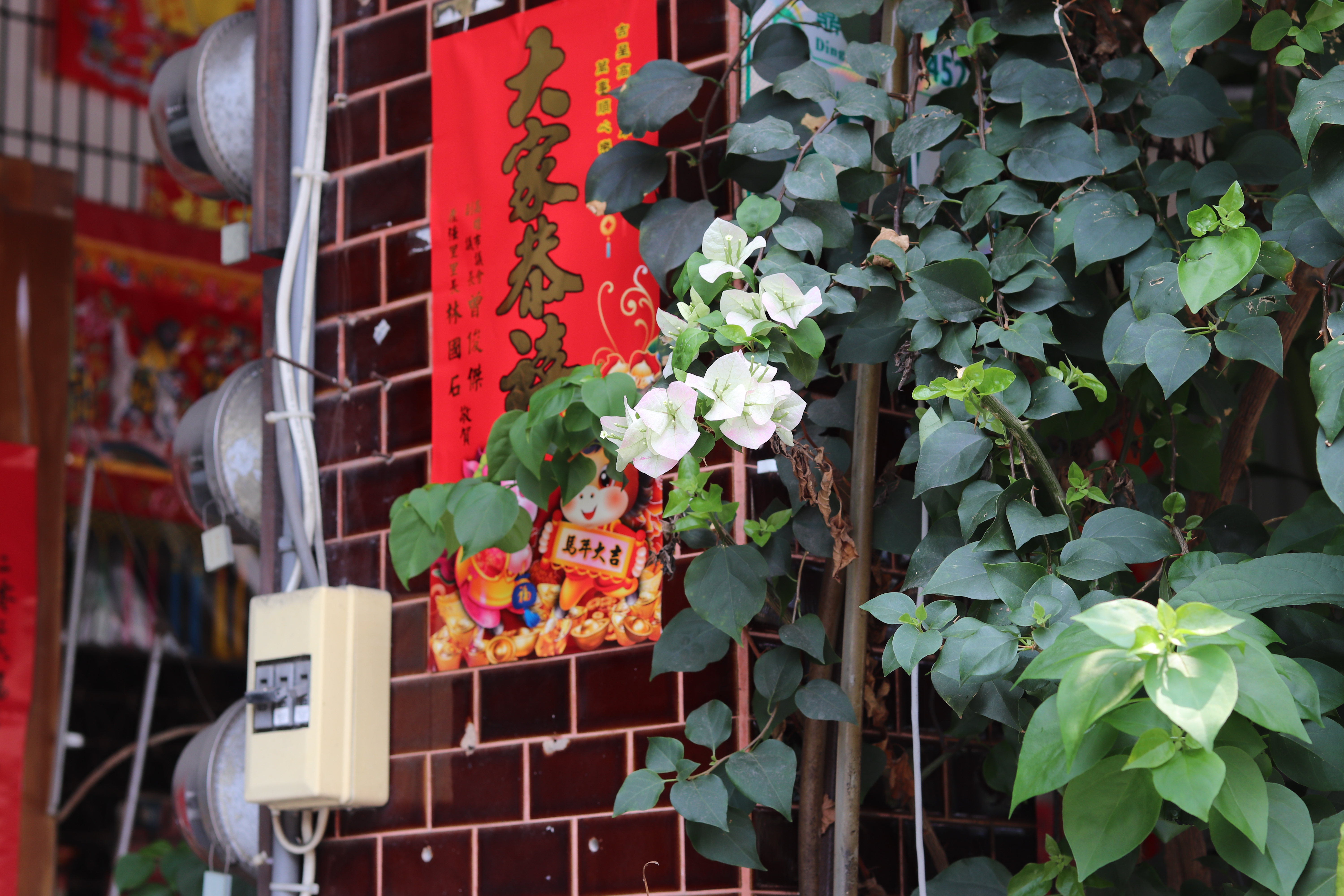
Near Wenzao University in Kaohsiung
- Building a friendship purely using the TL (being able to discuss abstract topics is very important for this) with fellow learners or native speakers who are able to speak at my level
- Being able to absorb new vocab (e.g. when someone explains it to me in conversation, naturally forcing me to remember and probably even use the word myself while replying to them, or when I look it up a few times) without needing to make a flashcard from it… sometimes. I wish it was more of the time!
- Guessing more and more pronunciations (of hanzi) and meanings (generally of two-characters compounds where I know at least one of the characters). This has a lot of advantages, not only reducing how many words I look up but making it easier and faster to look them up if I really need it.
- Roughly understanding native speakers that I run into in daily life and possibly holding conversations with them (highly dependent on their own communication skills; some people I’ve asked to explain things multiple times/over multiple conversations and they still can’t stop themselves using difficult language with me, others I am able to converse very naturally from the start; the biggest example unsurprisingly being taxi drivers)
- At minimum catching the topics in a conversation between native speakers. I notice this when I’m out or when listening to the radio.
- understanding popular media (for me, manga and anime) at least vaguely without looking words up, and being able to understand most everything with a dictionary app in hand. This was my biggest goal of studying here!
In class we studied from the ‘Modern Chinese’ textbook series, so in theory I know everything from book 1 to the end of book 3, but I attended class starting from the middle of book 2. I felt like book 2 was still going through the basics–I could communicate but it was hard to talk naturally with my classmates at that point–and I hit more and more of these milestones as I was progressing through book 3.
There is no substitute for cramming vocab. After having learned the arbitrary lists of words from the textbooks, I almost feel like it doesn’t matter (past a certain point) exactly what vocab I am learning as long as the number of words I know goes up. Incidentally, I find it much easier to passively pick up grammar than vocab; not that I don’t need to look up the grammar patterns I am seeing, but that the grammar sticks in my head more easily.
Things I still can’t do in Chinese which frustrate me
- Quickly scanning full paragraphs of text for information.
- Reading things written with an official tone or a more flowery tone ie. advertisements. I am ashamed to say that when I get an important-looking, official message, such as from my bank, I put it straight into Google Translate…
- Reading books, stories published online, etc.
- Expressing a complicated idea clearly under time pressure
- Understanding internet slang and using Chinese language social media (admittedly I haven’t tried very hard, but this is also because it’s so intimidating)
A note about writing
For my Chinese classes I chose schools that require written language skills (Feng Chia, Wenzao. I switched for reasons unrelated to the schools themselves, but I think they’re very similar; Feng Chia has a few hours of electives while Wenzao doesn’t and teaches a little faster, that’s all)
I started at Feng Chia, and for their placement test you must have writing skills in order not to start at level 1. I spent a chunk of free time for 2 months beforehand memorising how to write words 90% of which I could already understand, speak and recognise but not write (I think this is a common situation for Chinese learners). I used Anki and a reversed vocab deck for Modern Chinese, which is the textbook used at FCU CLC. I didn’t learn to write all the words I knew after just 2 months, but it was enough to match my overall upper basic/lower intermediate level for the test.
Writing by hand is a skill rarely needed outside of a classroom, but one I was excited to pick up because I enjoy handwriting, brush calligraphy, stationery and all that stuff. After this focused drilling I was finally able to write entire sentences and express myself without pausing to check a dictionary, which is awesome. I also find that I am able to visualise characters better after learning how to write them.
By the way, it’s surprising how much faster I learned to write a word if I had written it just once before in the past (I used to keep a physical vocab notebook). This is something to consider for those who don’t want to learn to write their TL yet but are thinking of doing so ‘someday’.