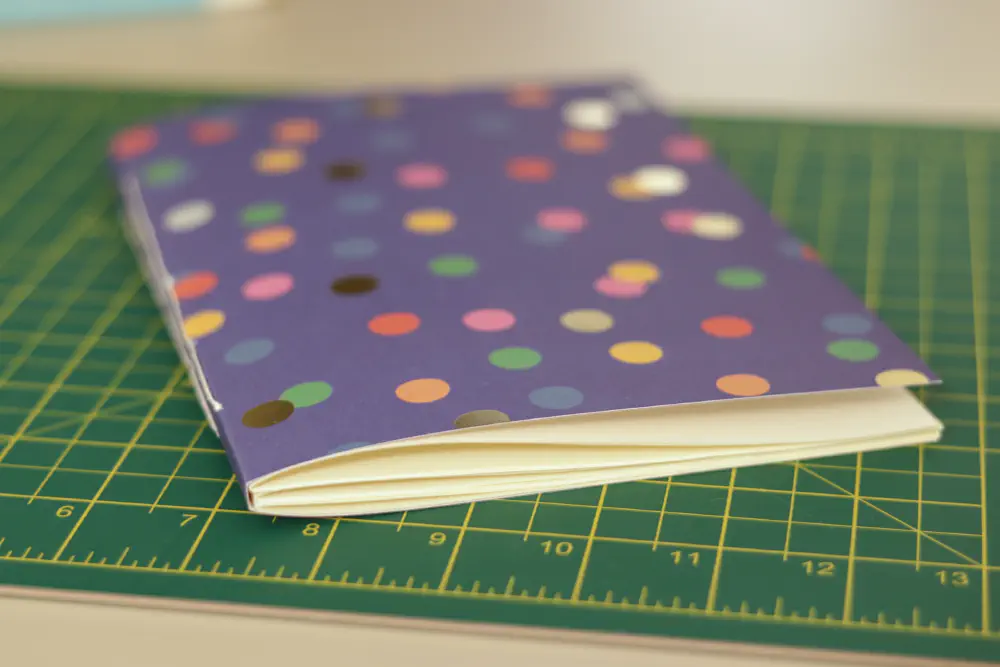
Just some quick notes I wanted to share. I like to bind my thicker sketchbooks with coptic binding so they lay more flat, but I don’t have board for hard covers and I wasn’t sure how best to attach a soft cover. I tried a few different methods before landing on this one.
The usual coptic binding method relies on having an open spine and a single board for each cover, because going around the edge of one board makes the first loops for the coptic stitch. If you have a closed spine you can’t do that. However, this can be solved with saddle stitch.
As you’ll see, these instructions require a piece of card more than twice the width of your page.
- Make your signatures and pierce the holes. An even number of holes is better for this.
- Press the stack of signatures gently together and measure the edge to see your spine thickness.
- Cut your cover out from the piece of card:
- Width: (2 * page width) + (spine thickness)
- Height: Page height
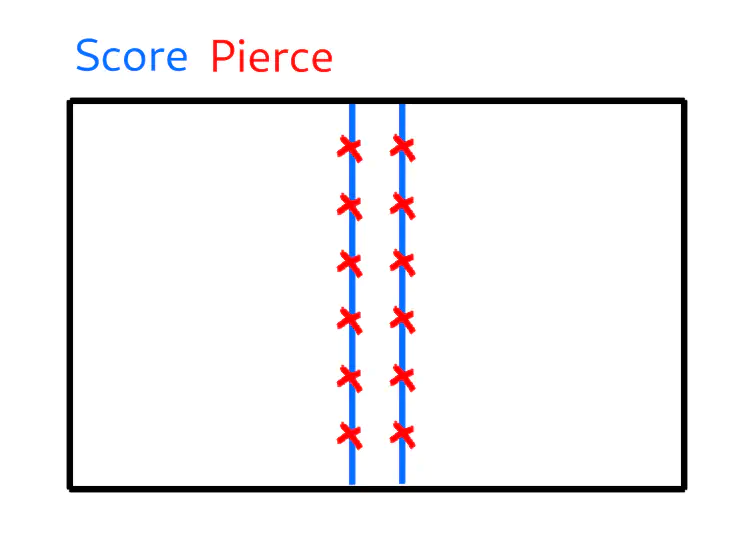
- Score the edges of the spine onto the cover (you can use a signature: line it up with the edge and score along it, then do the same on the opposite side)
- Pierce the same holes from your signatures on both of the scored lines. (These holes will be visible so it’s best to pierce them from the outside in; that way they look more clean.)
-
Put your first signature in and saddle stitch it together with one of the lines of holes (if you’re binding something other than plain paper, make sure to sew the back signature to the holes that will end up at the back of the book or front with the front)
The places where the thread links between the signature and the cover will now be usable as loops to go around when joining on your next signature by the usual coptic stitch.
-
After joining on all your signatures, saddle stitch the last signature to the other set of holes on the cover.
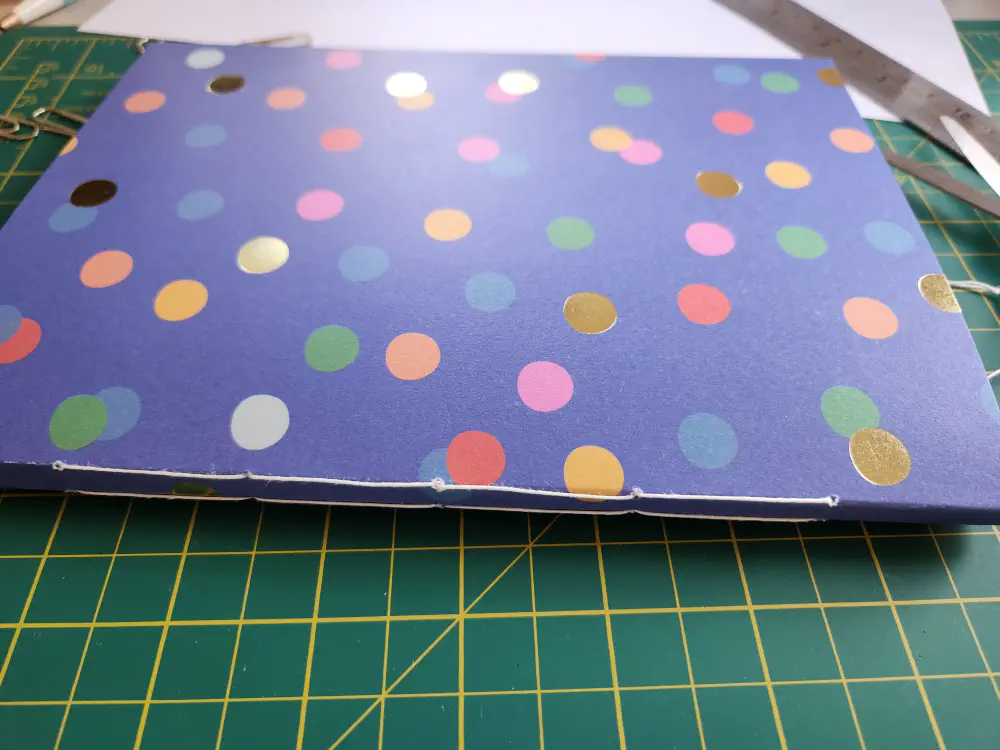
Done. You can see I messed up and used an even number of holes and I also pierced them inside out. Next time, I’ll be sure to consult my own blog post to avoid these mistakes…
side note: what is the sketchbook in the photos?
After taking a long break from drawing and painting, I’ve come back around to it and I now have an urge to fill a sketchbook with life studies and exercises. I made this one with pages from a giant pad of paper that I got for my birthday years ago, and which I never liked because it can only handle dry media and has a strong yellow tone. It should be good for low stakes pencil drawings.
Compared to my other hobbies, drawing is refreshing because I’ve already put so much effort into learning the fundamentals over the years. Like switching back to my level 20 class in a videogame after playing as a bunch of level 1-10 classes. On that note, shout out to bookbinding for being so fun and rewarding even though I am level 3 at best and don’t feel like grinding for exp.